


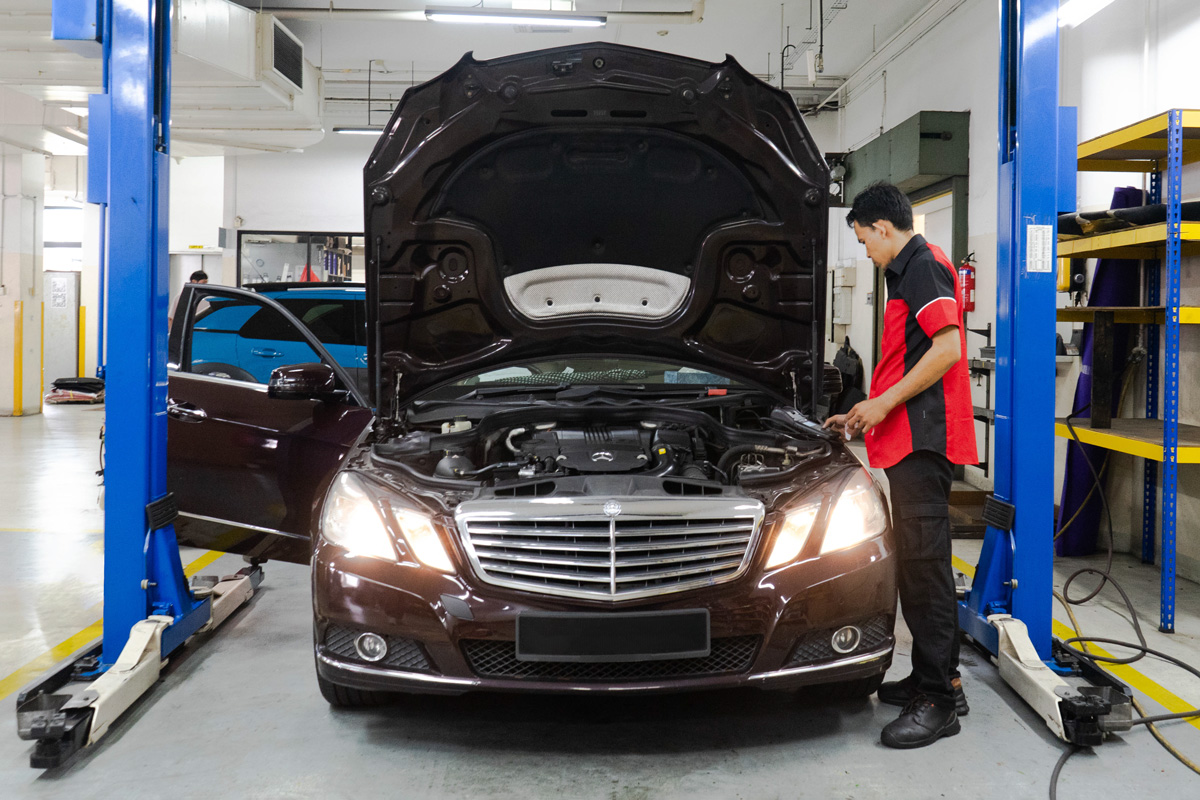
In today’s rapidly evolving automotive industry, technology plays a pivotal role in shaping how auto body repairs are conducted. Gone are the days when fixing a dent or replacing a damaged panel required only basic tools and craftsmanship.
Now, advanced systems and cutting-edge technologies have revolutionized the process, making it faster, more efficient, and more precise. Modern cars are essentially computers on wheels, equipped with sensors, cameras, and a myriad of electronic components. As a result, auto body repair has become more reliant on technology than ever before.
This article explores the various ways technology is transforming auto body repair and why staying up-to-date with these advancements is crucial for both technicians and vehicle owners.
1. Computerized Diagnostics
One of the most significant advancements in modern auto body repair is the use of computerized diagnostics. Vehicles today are equipped with complex electronic systems, from engine control units (ECUs) to advanced driver-assistance systems (ADAS). After a collision, these systems can malfunction or require recalibration, making it essential to assess the damage electronically.
- Scanning for issues: Modern repair shops use diagnostic scanners to identify hidden issues within a vehicle’s electronic systems. This technology ensures that all components, including safety features such as airbags and lane-assist systems, are functioning correctly.
- Post-repair scanning: Once the physical repairs are completed, another diagnostic scan is conducted to ensure that no new issues have been introduced and that the vehicle’s systems are back to their original state.
This technology significantly improves the accuracy of repairs, making sure that even issues not visible to the naked eye are detected and resolved.
2. Advanced Driver Assistance Systems (ADAS) Calibration
As vehicles become more automated, the need for ADAS calibration in auto body repair has grown exponentially. ADAS features, such as collision detection, adaptive cruise control, and lane departure warning systems, rely on cameras and sensors placed around the car. When a vehicle is involved in an accident, these sensors may become misaligned or damaged, affecting the car’s safety performance.
- Calibration after repairs: Repairing the body of a car is no longer just about fixing physical damage. If an ADAS component is replaced or repaired, recalibrating the system is essential to ensure that the car’s safety features are working as intended. Specialized equipment and software are used to realign these sensors and cameras so they function correctly post-repair.
- Sensor integration: As more vehicles adopt ADAS technology, the need for sensor integration into auto body repair increases. This ensures that features like automatic emergency braking or lane-keeping assistance are fully operational after any repairs.
3. 3D Printing in Auto Body Repair
3D printing technology is making waves in various industries, and auto body repair is no exception. It has become a game-changer in fabricating parts that are either difficult to find or expensive to replace.
- Custom parts: For older or rare vehicles, finding replacement parts can be a significant challenge. With 3D printing, repair shops can create custom parts on demand, drastically reducing the wait time for repairs. This also ensures that the part perfectly fits the damaged area, providing seamless integration.
- Cost efficiency: 3D printing can also lower costs by eliminating the need for extensive inventories of replacement parts. Shops can print what they need when they need it, saving space and reducing overhead.
The use of 3D printing not only speeds up the repair process but also allows for more affordable solutions when dealing with rare or hard-to-source components.
4. Laser Frame Alignment Systems
When a car experiences a severe collision, the frame can become misaligned, compromising the vehicle’s structural integrity. In the past, aligning a car’s frame was a manual process that required technicians to rely on visual assessments and manual tools. Today, however, laser frame alignment systems have revolutionized the process.
- Precision alignment: Using laser technology, repair shops can assess the frame’s alignment with pinpoint accuracy. This ensures that the vehicle’s frame is returned to its original specifications, crucial for both safety and performance.
- Faster repair times: Laser systems significantly reduce the time it takes to align a car’s frame, allowing technicians to complete repairs faster without sacrificing quality.
By combining precision with speed, laser frame alignment technology ensures that the structural integrity of vehicles is restored efficiently, improving both safety and longevity.
5. Paint Matching and Application Technology
Auto body repair isn’t just about fixing dents and scratches; the aesthetic restoration of the vehicle is equally important. Traditional methods of matching paint were often based on visual assessments, which left room for error. Today, digital paint-matching technology has revolutionized this aspect of repair.
- Digital paint matching: Using spectrophotometers and specialized software, technicians can now precisely match a vehicle’s paint color. This technology analyzes the car’s existing paint and provides the exact formula to replicate it, ensuring that any new paint blends seamlessly with the original.
- Robotic paint application: Some high-tech auto body shops have also introduced robotic paint systems. These systems can apply paint evenly and consistently, reducing the chance of human error and ensuring a flawless finish.
By incorporating advanced paint technology, repair shops can guarantee a near-perfect match and finish, restoring the car’s appearance to its pre-accident condition.
6. Augmented Reality (AR) and Virtual Reality (VR) Training
As auto body repair grows more complex, there is a greater need for continuous technician training. Augmented reality (AR) and virtual reality (VR) technologies are emerging as valuable tools for training technicians in advanced repair techniques.
- AR for real-time assistance: Augmented reality can provide technicians with real-time information as they work on a vehicle. For example, AR glasses can overlay repair instructions or vehicle schematics, guiding technicians through complex procedures step by step.
- VR for immersive training: Virtual reality offers a hands-on, immersive training experience, allowing technicians to practice repairs in a simulated environment before applying their skills to real vehicles.
These technologies enhance both the learning process and the execution of repairs, ensuring that technicians are well-equipped to handle the latest in automotive technology.
7. Automated Estimation Software
One of the most time-consuming aspects of auto body repair is creating accurate repair estimates. However, with automated estimation software, this process has been streamlined.
- Instant damage assessment: Many modern systems can analyze photographs of the damage and generate a repair estimate within minutes. These programs use algorithms to assess the severity of the damage and calculate labor and parts costs.
- Improved accuracy: Automated systems reduce human error, providing more accurate estimates. This results in faster approval times from insurance companies and quicker repairs for vehicle owners.
Automated estimation software speeds up the entire repair process, benefiting both repair shops and customers by reducing wait times and increasing transparency.
Conclusion
Technology has transformed modern auto body repair into a more precise, efficient, and cost-effective process. From computerized diagnostics and ADAS calibration to 3D printing and laser frame alignment, the industry has embraced innovation to deliver higher-quality repairs. Exotic Motors is a premier destination for auto body repair in Bellevue, WA, utilizing advanced technology to deliver outstanding results.
Their dedication to quality and innovation makes them a leading choice for those seeking modern auto body repair solutions. As vehicles continue to evolve, incorporating more complex systems and components, auto body shops must stay ahead of the curve by adopting these technological advancements. The future of auto body repair is undoubtedly high-tech, and both technicians and vehicle owners stand to benefit from the increased efficiency and accuracy these tools provide.
Apart from that, if you want to know about GPS Car Tracking then please visit our Automobile Category.
Modern cars are equipped with sensors and cameras, making it crucial to understand windshield crack types for accurate repair.
Modern cars are equipped with sensors and cameras, making them essentially computers on wheels. This includes advanced driver-assistance systems (ADAS) that can be affected by windshield cracks. For more information on windshield crack types, see here.
Modern cars are equipped with sensors and cameras, making them essentially computers on wheels. This includes advanced driver-assistance systems (ADAS) that can be affected by windshield cracks. For more information on windshield crack types, see here.
Modern cars are equipped with sensors and cameras, making it essential to assess windshield cracks electronically as part of computerized diagnostics.
