


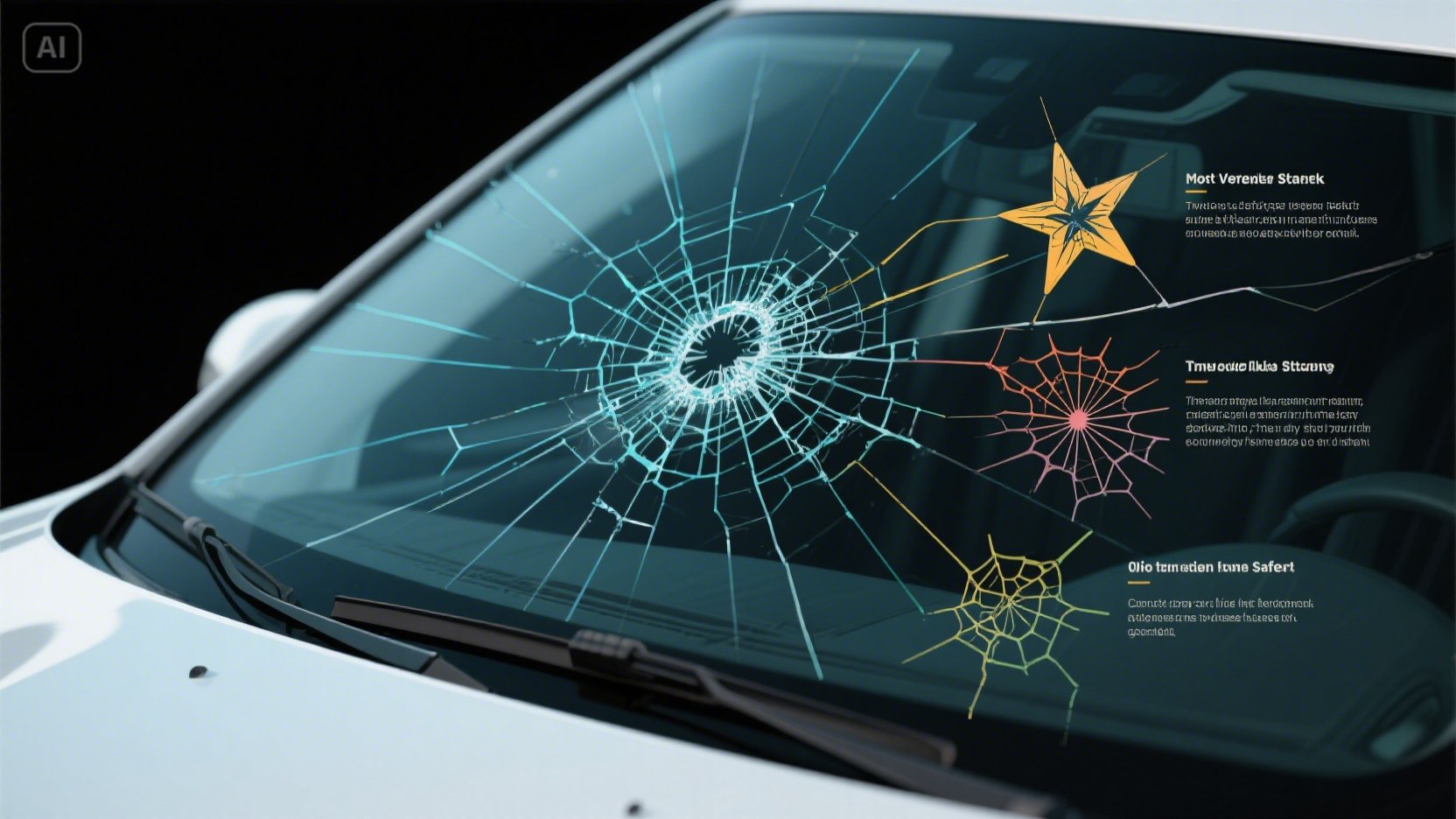
Your vehicle’s windshield plays a crucial role not only in visibility but also in structural integrity and safety. However, it’s prone to various damages, with cracks being among the most common problems. Recognizing the different windshield crack types can help you determine the severity of the damage and decide on prompt and appropriate repair or replacement.
Why Identifying Windshield Crack Types Matters
Not all windshield cracks are the same. Some can be repaired easily, while others might require a full windshield replacement. The size, shape, and location of a crack affect its potential impact on your safety and the cost of repair. Understanding these differences can save you money and keep you safe on the road.
Common Windshield Crack Types
Here we break down the most frequent windshield crack types, their appearances, causes, and what you should do about them.
1. Chip or Bullseye Crack
This is one of the most common types of windshield damage caused by rocks or debris hitting the glass. The chip usually has a circular shape with a cone-shaped crack beneath the surface resembling a bullseye. These cracks typically measure less than an inch in diameter.
Why it occurs: Sudden impact from small projectiles while driving often causes bullseye chips.
Repair advice: Since bullseye cracks are contained and smaller in size, they can often be repaired easily without full windshield replacement.
2. Half-Moon Crack
Similar to bullseye cracks, the half-moon crack has a semi-circular form, resembling a half-circle or a crescent. It occurs due to slower impacts but can quickly spread if left untreated.
Why it occurs: Slow, angled impact from debris or temperature fluctuations causing glass expansion and contraction.
Repair advice: Early repair is recommended to prevent spreading. Professionals can often fill and seal half-moon cracks effectively.
3. Star Break
This crack type features multiple ‘legs’ radiating out from a central point, similar to a star. Each leg extends outward from the impact site, and these cracks can vary in length.
Why it occurs: Forceful impacts causing the glass to fracture in several directions.
Repair advice: Star breaks can be repaired when the cracks are less than a few inches; however, if legs spread extensively, replacement might be necessary.
4. Long Crack
Long cracks are self-explanatory — these cracks are linear fissures that extend over 6 inches, sometimes spanning across the windshield. They generally begin small and lengthen over time.
Why it occurs: Could be due to running over potholes, temperature stress, or previous chip damage that wasn’t repaired promptly.
Repair advice: While some long cracks may be repaired, often windshield replacement is the safest and most reliable solution for cracks this size.
READ MORE: The Role of Technology in Modern Auto Body Repair
5. Edge Crack
Edge cracks start at the edge of the windshield and grow inwards. These cracks are particularly dangerous as the edges are points of structural weakness.
Why it occurs: Continuous stress on the windshield frame, poor installation, or impacts near the edges.
Repair advice: Due to the potential for rapid spread, edge cracks usually require replacement instead of repair to maintain safety.
6. Combination Crack
A combination crack features two or more of the crack types mentioned above. For example, a star break connected with a long crack.
Why it occurs: Multiple impacts or extended stress after initial damage that causes cracks to merge or propagate further.
Repair advice: Repairing combination cracks can be difficult and sometimes impossible depending on their size and position, often necessitating a full replacement.
Factors That Affect Crack Development and Severity
Several factors influence how a crack behaves after it forms:
- Temperature changes: Hot and cold temperatures cause glass to expand and contract, worsening existing cracks.
- Driving conditions: Rough roads, bumps, and vibrations can cause cracks to spread quickly.
- Position on windshield: Cracks in the driver’s line of sight may warrant immediate repair or replacement for safety reasons.
- Size and length: Smaller cracks often can be fixed, but long or spreading cracks make the windshield unsafe.
When to Repair vs. When to Replace Your Windshield
Understanding the different windshield crack types is essential for making the right call regarding repair or replacement.
- Repair: Small chips, bullseye, star breaks under 2-3 inches, and half-moon cracks can usually be repaired, saving you time and money.
- Replace: Long cracks over 6 inches, combination cracks, edge cracks, and any damage obstructing the driver’s view typically require full windshield replacement.
Prompt attention to even minor windshield damage helps prevent costly repairs and ensures your vehicle’s integrity during accidents.
Tips for Preventing Windshield Cracks
While some damage is unavoidable, these tips can minimize your risk of developing windshield cracks:
- Maintain a safe following distance to avoid debris kicked up by other vehicles.
- Avoid sudden temperature changes — park in shaded areas during hot weather and warm your car gradually in cold conditions.
- Drive cautiously over potholes and rough terrain.
- Inspect your windshield regularly and get small chips repaired immediately.
Conclusion
Recognizing the various windshield crack types empowers you to make informed decisions regarding the care and maintenance of your vehicle’s glass. Whether you face a minor bullseye chip or a dangerous edge crack, timely action is crucial. Always consult with a professional auto glass technician to assess the damage and recommend the best course of action to keep you safe on the road.
Apart from that, if you want to know about GPS Car Tracking then please visit our Automobile Category.
