


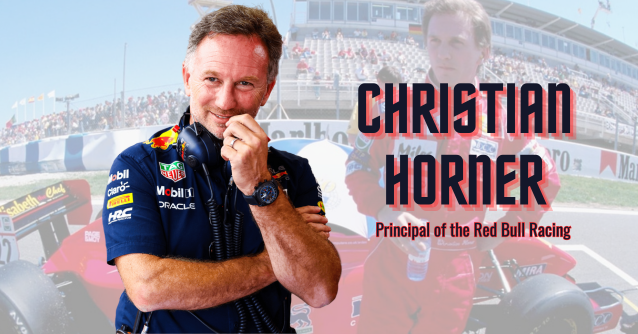
Christian Horner has long been a pivotal figure in the world of Formula 1, renowned for his tactical brilliance and dynamic leadership. As team principal of Red Bull Racing from 2005 until July 2025, Horner steered the team through multiple championship victories and firmly established Red Bull as a powerhouse in the fast-paced world of F1.
His story is unusual in a sport full of unusual stories. He was a racing driver who never reached Formula 1 — and then became the longest-serving team principal in the sport’s modern history, building a team that won six constructors’ championships. Then, in the summer of 2025, after twenty years, it ended abruptly. This article dives into the life, career, and influential role of Christian Horner, exploring how his leadership helped shape modern motorsport — and what came after.
Early Life and Racing Beginnings
Born on November 16, 1973, in Leamington Spa, England, Christian Horner’s passion for racing was evident from a young age. Before stepping into management, Horner was a racing driver himself, competing in various junior single-seater championships including British Formula Renault and British Formula 3.
His firsthand experience on track gave him valuable insight into the challenges drivers face, which later informed his management style. He understood what a driver needs from a team — clear communication, trust, and a car they can rely on — because he had once been the driver asking for those things.
Although his driving career didn’t reach Formula 1, Horner quickly made the transition to team management. At just 26 years old, he became the boss of Arden International, a team competing in the Formula 3000 series, marking the beginning of his managerial career in motorsport. Running a junior team taught him the unglamorous skills that would define his later success: managing budgets, hiring engineers, motivating staff, and making decisions with incomplete information.
Rise to Prominence: Joining Red Bull Racing
Christian Horner’s big break came in 2005 when Red Bull Racing appointed him as their team principal. At the time, Red Bull was a relatively new entrant into Formula 1, having taken over Jaguar Racing’s assets. Horner was tasked with building the team’s competitive credentials amid a field dominated by well-established giants like Ferrari and McLaren. He was 31 — the youngest team principal in Formula 1.
Many observers were sceptical. Red Bull was seen as a drinks company playing at racing, and Horner was seen as a junior-series manager out of his depth. He answered by building slowly and deliberately: hiring the right technical people, including the designer Adrian Newey, and creating a culture centred on innovation, agility, and precision.
His ability to combine technical development with excellent team morale was key in transforming Red Bull Racing into a frontrunner. The team was known for working hard and enjoying it — a culture Horner deliberately cultivated, in contrast to the more corporate atmosphere of some rivals. Fostering strong partnerships, notably the collaboration with engine supplier Renault, was another early priority.
Championship Success and Leadership Style
Christian Horner’s leadership was instrumental in Red Bull Racing’s golden era. From 2010 to 2013, Red Bull won four consecutive constructors’ and drivers’ championships, largely powered by the exceptional talent of Sebastian Vettel. The synergy between Horner’s management and Vettel’s driving prowess was a hallmark of this dominant period.
After a difficult period when the hybrid engine regulations arrived and Mercedes dominated, Red Bull rebuilt — and returned to the top with Max Verstappen. His leadership during the closely contested 2021 and 2022 seasons highlighted his ability to manage pressure and foster innovation simultaneously. The 2021 title fight, decided on the final lap of the final race, was one of the most intense in the sport’s history, and Horner’s calm handling of his team through it was widely noted.
Horner is known for his calm demeanour and clear communication style. Unlike many fiery F1 principals, Horner maintains a composed presence even in high-pressure situations. This calm approach helps the team stay focused and resilient during the often unpredictable nature of racing weekends. Moreover, he places a strong emphasis on teamwork and open dialogue. His ability to balance technical feedback from engineers with the insights of drivers like Max Verstappen allowed Red Bull Racing to continuously evolve and challenge Mercedes’ dominance in later years.
Challenges and Controversies
Like any high-profile figure in Formula 1, Christian Horner’s career has also seen challenges and controversies. The fierce competition between Red Bull Racing and rivals, especially Mercedes, sparked intense moments both on and off the track. Horner has not shied away from defending his team vigorously in the media, often engaging in tactical exchanges with other team principals and race officials. His rivalry with Mercedes boss Toto Wolff became one of the sport’s defining storylines.
In addition to rivalries, Horner had to navigate complex regulatory changes, technical disputes, and the ongoing evolution of F1’s hybrid power units. His adaptability and sharp strategic mind helped Red Bull respond effectively to these hurdles, maintaining their status as title contenders year after year.
In early 2024, Horner was the subject of an internal investigation following allegations of inappropriate behaviour made by a female colleague. Red Bull’s parent company cleared him after an investigation, and a subsequent appeal upheld that outcome, but the episode dominated headlines for months and put his position under intense scrutiny. It was the first serious threat to his two-decade tenure — and a sign of how the pressures around the team had changed.
The End of an Era: Dismissal in 2025
Red Bull dismissed Horner as team principal and CEO on July 9, 2025, ending a 20-year tenure, and appointed Laurent Mekies in his place. The announcement was sudden, coming midway through a season in which Red Bull’s dominance had faded and internal tensions had grown.
Twenty years is an extraordinary run in Formula 1, a sport where team principals often last a few seasons. Horner had survived regulation changes, engine supplier switches, driver controversies, and the intense politics of the paddock. His departure marked the end of an era — not just for Red Bull, but for Formula 1, where he had been a constant presence for two decades.
Christian Horner’s Impact on Motorsport Beyond F1
Beyond his direct role at Red Bull Racing, Christian Horner has become an influential voice in the broader motorsport community. He frequently comments on the direction of Formula 1, advocating for innovations that improve racing spectacle and sustainability. Horner supports initiatives that seek to balance technological advancement with cost control, ensuring the sport remains competitive and engaging for future generations.
Additionally, his mentorship of young drivers and managers has helped shape new talent within the sport. Many view Horner as a role model for aspiring team principals, demonstrating how strong leadership and clear strategic vision can elevate a team from underdog status to championship glory.
Since leaving Red Bull, Horner has taken an advisory role with private equity firm Oakley Capital focused on sports investment, and fans and pundits continue to speculate about a possible return to Formula 1. His blend of experience, tactical acumen, and motivational leadership makes him one of the most respected figures in modern Formula 1 — and a return to the pit wall would surprise almost nobody.
Looking Ahead: The Future
As Formula 1 continues to evolve with new regulations and emerging technologies, the role of a team principal remains more crucial than ever. The sport’s new rules, its growing global audience, and its cost cap all demand leaders who can manage complexity while keeping a team motivated.
Whether Horner returns to F1 or builds a new career in sports investment, his legacy is already secure. He took a team that many dismissed as a marketing exercise and turned it into one of the most successful operations in the history of the sport. That is a record few in motorsport can match.
Conclusion
Christian Horner’s journey from a young racing driver to one of the most successful team principals in Formula 1 history is a testament to his passion, intelligence, and leadership. His ability to build a winning team culture at Red Bull Racing and his impact on the sport extends far beyond just trophies and titles.
For those interested in motorsport management or Formula 1’s evolving landscape, Horner’s career offers valuable insights into how vision, perseverance, and effective communication can lead to sustained success in one of the world’s most challenging sports. In summary, Christian Horner was not just a key figure in Red Bull Racing’s success; he is a visionary leader whose influence continues to shape Formula 1’s present and future — even from outside the pit wall.
